How Do Tesla + Zoox Differ in Autonomous Design Strategy?
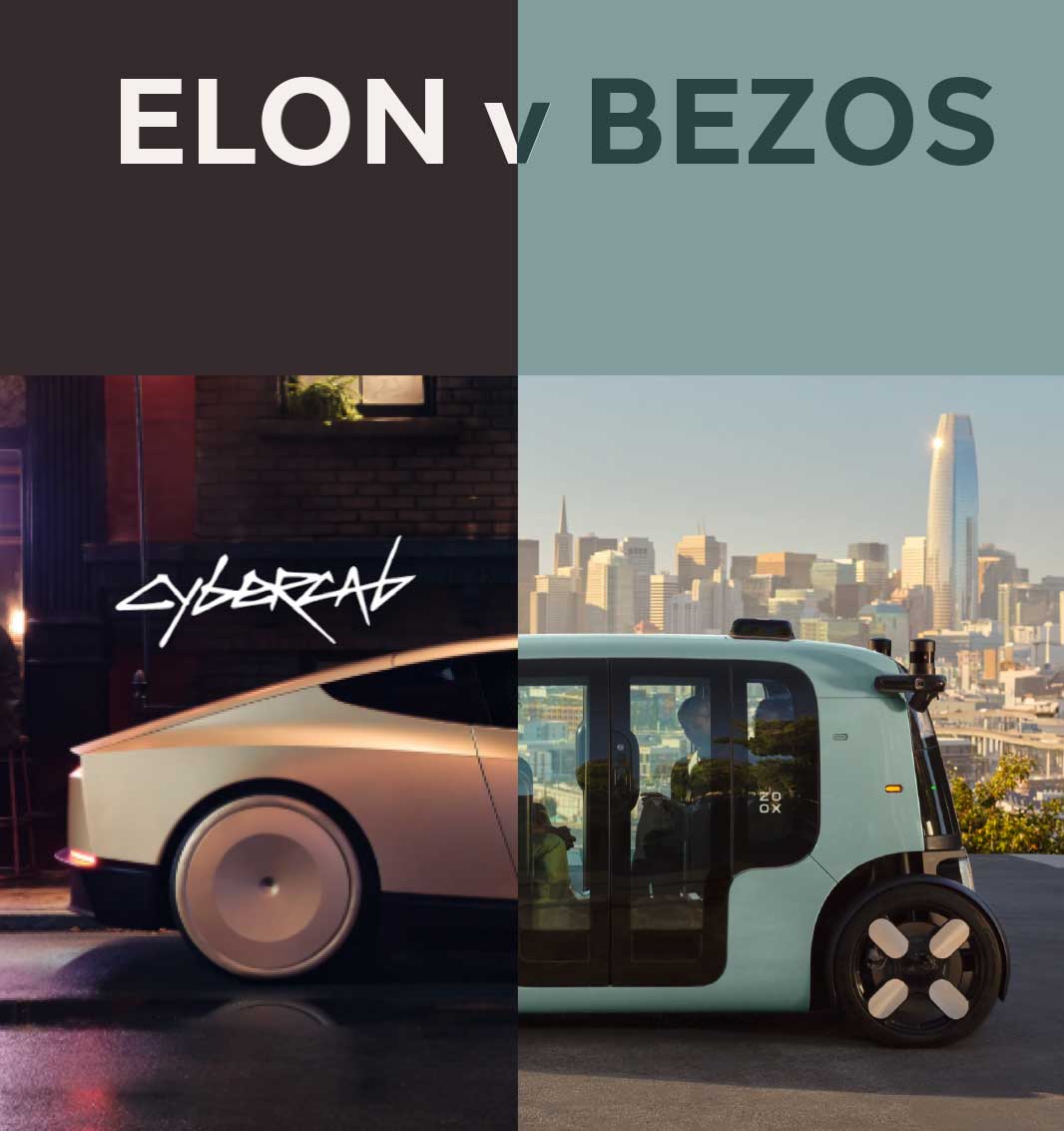
The global autonomous vehicle market is projected to reach $2.01 trillion by 2034, but the battle isn't just about software. Tech's wealthiest leaders are advancing opposing physical design philosophies. While Tesla projects machine-centric dominance, Zoox embraces human-centric empathy, a divergence that will fundamentally reshape our urban landscapes.
How Do Elon and Bezos Differ in Autonomous Product Architecture?
The race for autonomous robotics reveals a stark visual and strategic divide.
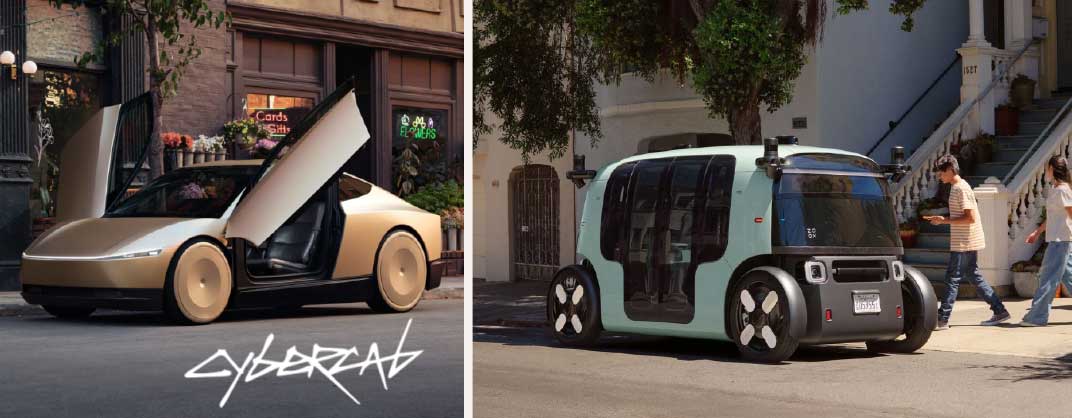
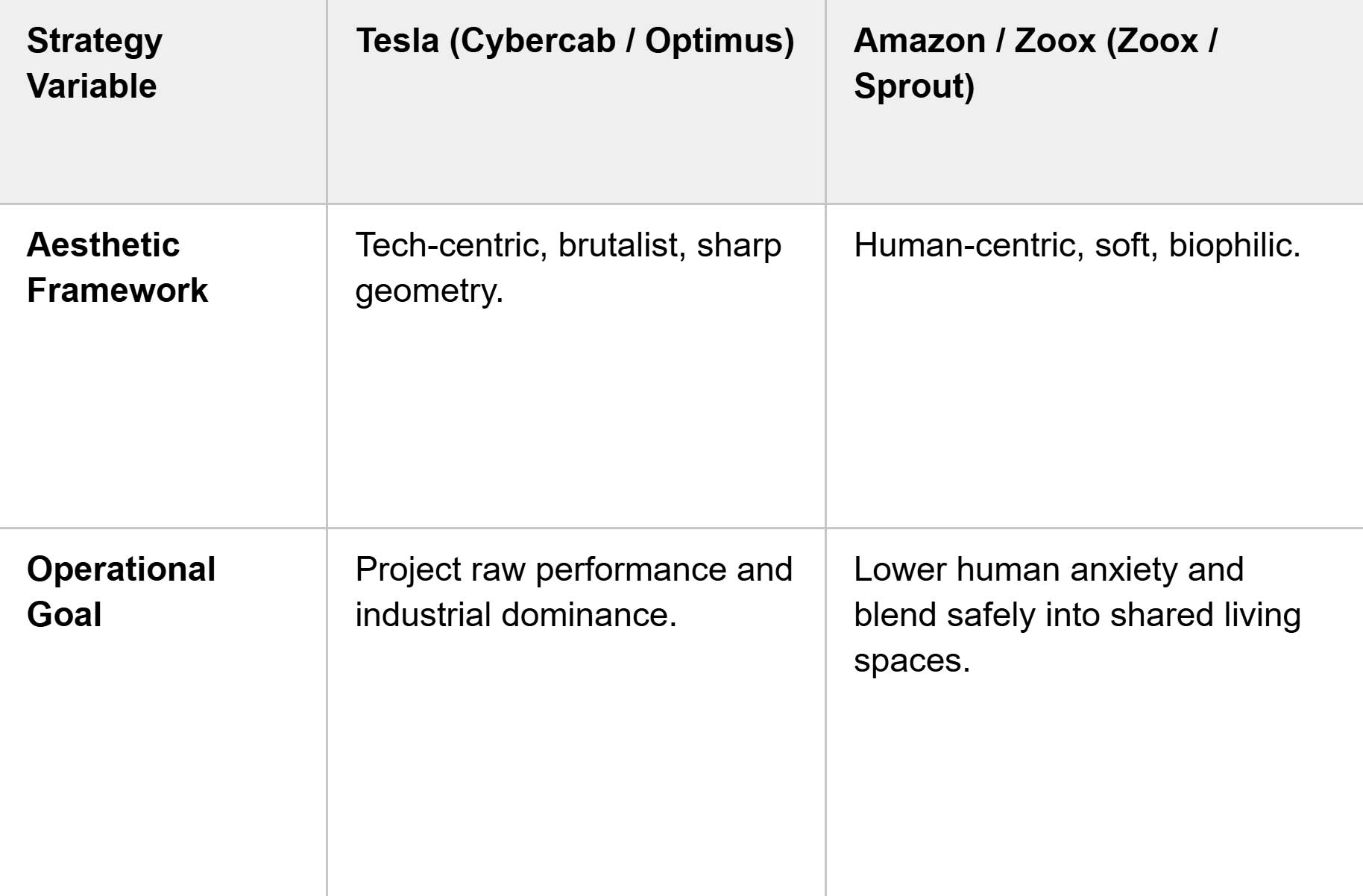
On one side, Tesla's Cybercab and Optimus humanoid robot embody a Tech-Centric ethos. Their brutalist design language, characterised by aggressive angles, monochrome styling, and sharp geometric lines, communicates raw technological innovation and industrial authority.
On the other side, you have Jeff Bezos and Amazon's ecosystem, highlighted by their $1.2 billion acquisition of Zoox and investments in startups like New York's Fauna Robotics. Their approach is explicitly Human-Centric. From the Zoox autonomous carriage to Fauna's 'Sprout' platform, the aesthetic and CMF (Colour, Material, Finish) is soft, biophilic, and approachable. It is specifically engineered to lower anxiety and blend safely into shared living spaces.

Each path presents a valid perspective, yet they pose fundamental questions about what lies ahead. Will tomorrow be defined by machines that assert dominance through technological strength? Or will it be shaped by products that cultivate trust through human-centered empathy?
Why Does High-Utilisation Fleet Mobility Break Traditional Automotive Unit Economics?
For a suburban family, the personal car remains a vital tool for flexibilityand the draining daily commute into the city is precisely the journey they will willingly automate first. However, in dense urban centres, traditional automotive ownership metrics completely break down.
The traditional automotive industry relies on selling 70 million new cars every year to sustain itself, a model entirely dependent on millions of cars sitting idle. Consider the usage comparisons:
- The Private Urban Car: Sits parked and completely idle for about 96% of its life, while owners navigate the nightmare of scarce parking, emissions and congestion charges and difficult EV charging access. (based on typical annual mileage and usage times)
- The Fleet Model: In contrast a New York City taxi cab is actively utilised almost 96% of the time on shift-based driving.

By accelerating the Cybercab, Elon Musk intentionally disrupts Tesla's core automotive production model. Rather than merely competing with standard taxi networks, the Cybercab's strategic two-seater design acts as an affordable substitute for traditional ownership, while allowing users to lease out their autonomous personal car when idle. Anticipating a resulting drop in individual vehicle demand, production capacity previously allocated to the outgoing Model S and X has been firmly redirected toward scaling Optimus.
Conversely, this broken math is exactly why Amazon acquired Zoox. Co-founded by designer Tim Kentley-Klay and engineer / computer scientist Jesse Levinson, Zoox approached the challenge from a strictly User-Focused Design perspective rather than adopting a standard car platform. They built a bi-directional, autonomous carriage designed purely for shared urban mobility.
This creates a fascinating architectural contrast. In the Cybercab, the forward-facing seating dictates that the autonomous technology and the journey itself are the spectacle. Zoox, however, utilises inward-facing seats where the occupants, and their conversations, are the focal point. It is strikingly reminiscent of the horse-drawn carriage from over a century ago. This isn't design nostalgia; it is a strategic return to fundamental human needs, proving that when you remove the physical burden of driving, the vehicle's architecture can finally prioritise the shared passenger experience.
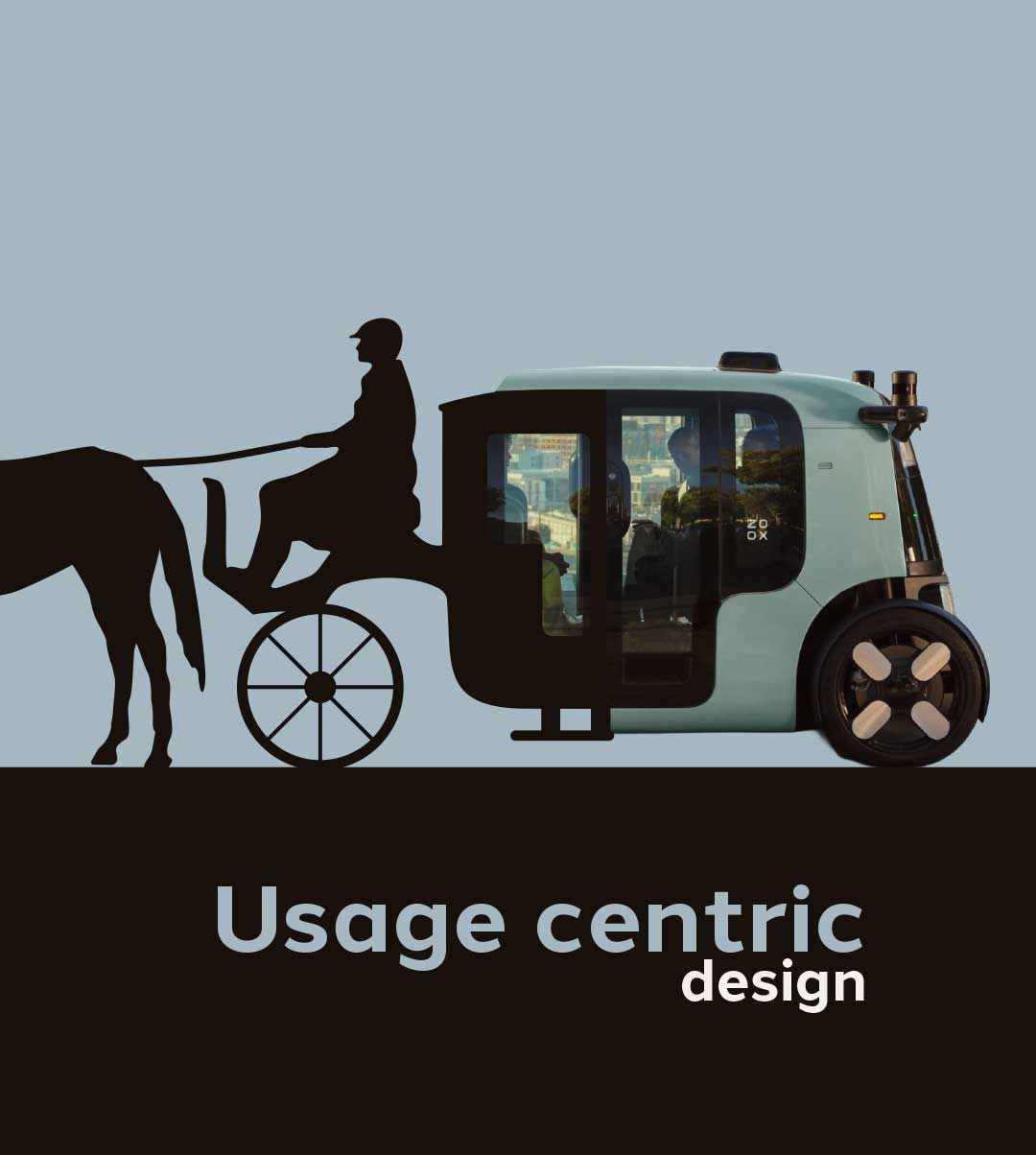
When we stop designing for the 100-year-old industrial complex of the rural driveway and start designing for the urban passenger, the entire economic model changes.
How Does Autonomous Hardware Architecture Drive Urban Space Transformation?
The biggest opportunity in this User-Focused Design revolution will not be on the vehicles themselves; it will be on our cities.
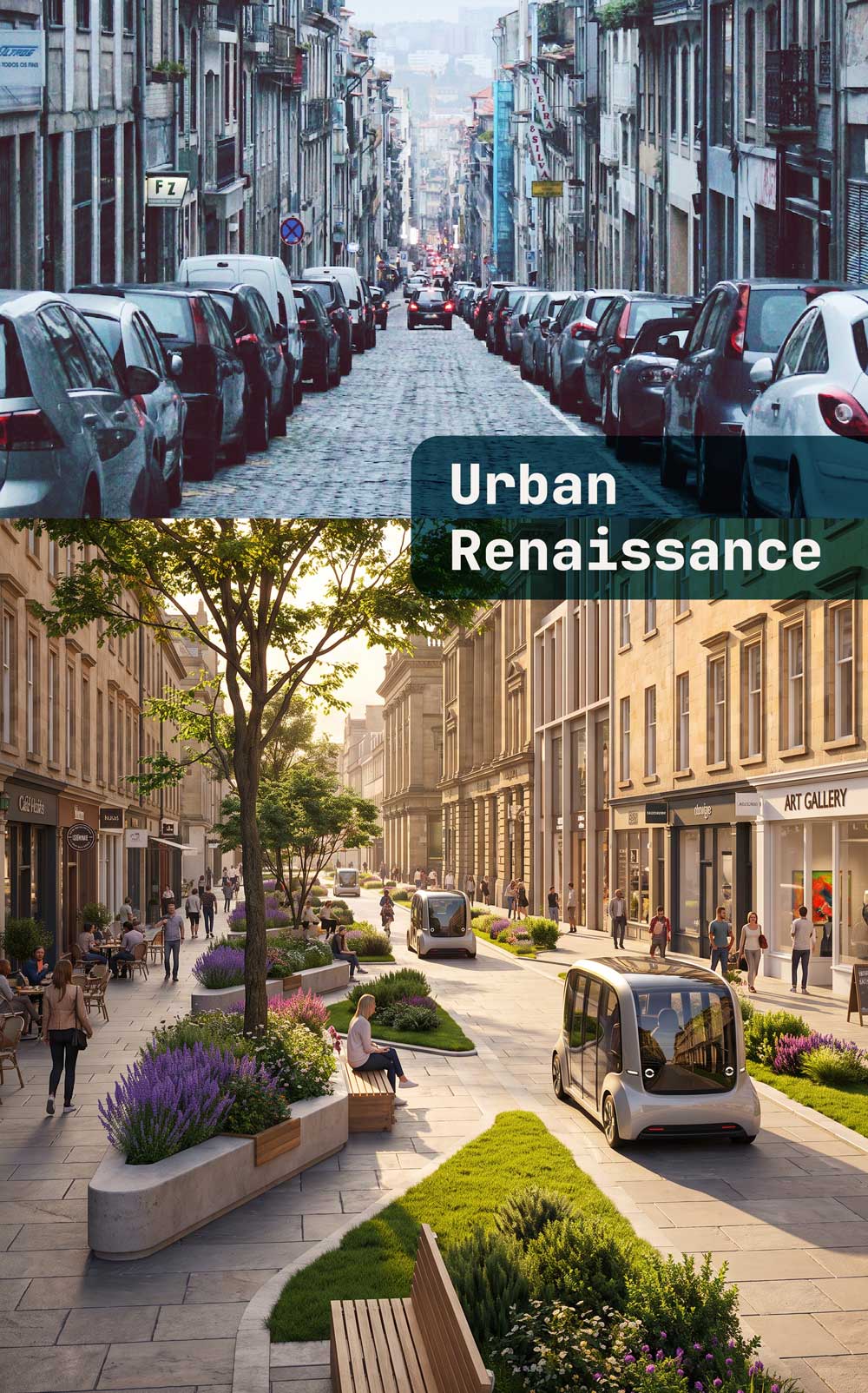
With personal vehicles sitting idle 96% of the time, metropolitan landscapes allocate trillions of dollars in real estate exclusively to vehicle storage. Estimates range from 12 to 36 billion square meters are tied up in the provision for parked cars. Transitioning to purpose-built, high-utilisation autonomous vehicles will unlock massive amounts of valuable urban space:
- Reclaiming Civic Real Estate: Millions of acres of street-level asphalt and parking lots can be transformed into productive commercial spaces, parklands, and pedestrian zones.
- Repurposing Structural Assets: Multistory urban parking structures can be redeveloped into light-industrial hubs, civic facilities, or affordable housing.
- Optimised Public Interaction: Bi-directional, approachable vehicle footprints reduce street congestion and drop-off friction, integrating seamlessly into shared pedestrian ecosystems.
- Smart Streetscapes & Shared Space Lighting: As streets transition from vehicle-dominated roads to pedestrian-first shared spaces, a massive commercial opportunity emerges for intelligent street furniture, integrating advanced low-glare luminaires and customisable, adaptive lighting hubs into a unified pedestrian ecosystem.
Navigating these shifts from product silhouettes to city / street infrastructure isn't easy, but you don't have to do it alone. Let's schedule time to discuss how user centric and strategic design can elevate your next product roadmap.
Frequently Asked Questions (FAQ)
What is the core difference between Tesla's and Zoox's autonomous design strategies?
Tesla uses a tech-centric aesthetic that emphasises machine dominance, while Zoox uses a soft, biophilic, and bi-directional architecture designed to build user trust through empathy.
How does autonomous fleet utilisation disrupt traditional automotive manufacturing?
Traditional automotive models rely on selling vehicles that sit parked 96% of the time. Autonomous shared fleets achieve up to 96% active utilisation, shifting focus from unit volume to continuous runtime and operational efficiency
Why is CMF critical for commercial robotics adoption?
Colour, Material, Finish (CMF) and form factor reduce human anxiety in shared environments, lowering adoption resistance and accelerating public acceptance of autonomous machines in dense spaces.
How does autonomous vehicle design impact urban land development?
Replacing idle vehicles with active autonomous fleets unlocks millions of acres of parking infrastructure for redevelopment into commercial space, retail hubs, and affordable housing.
Posts